Austin Weber et al. investigate the influence of mineral dust on glacial albedo in the tropical Andes
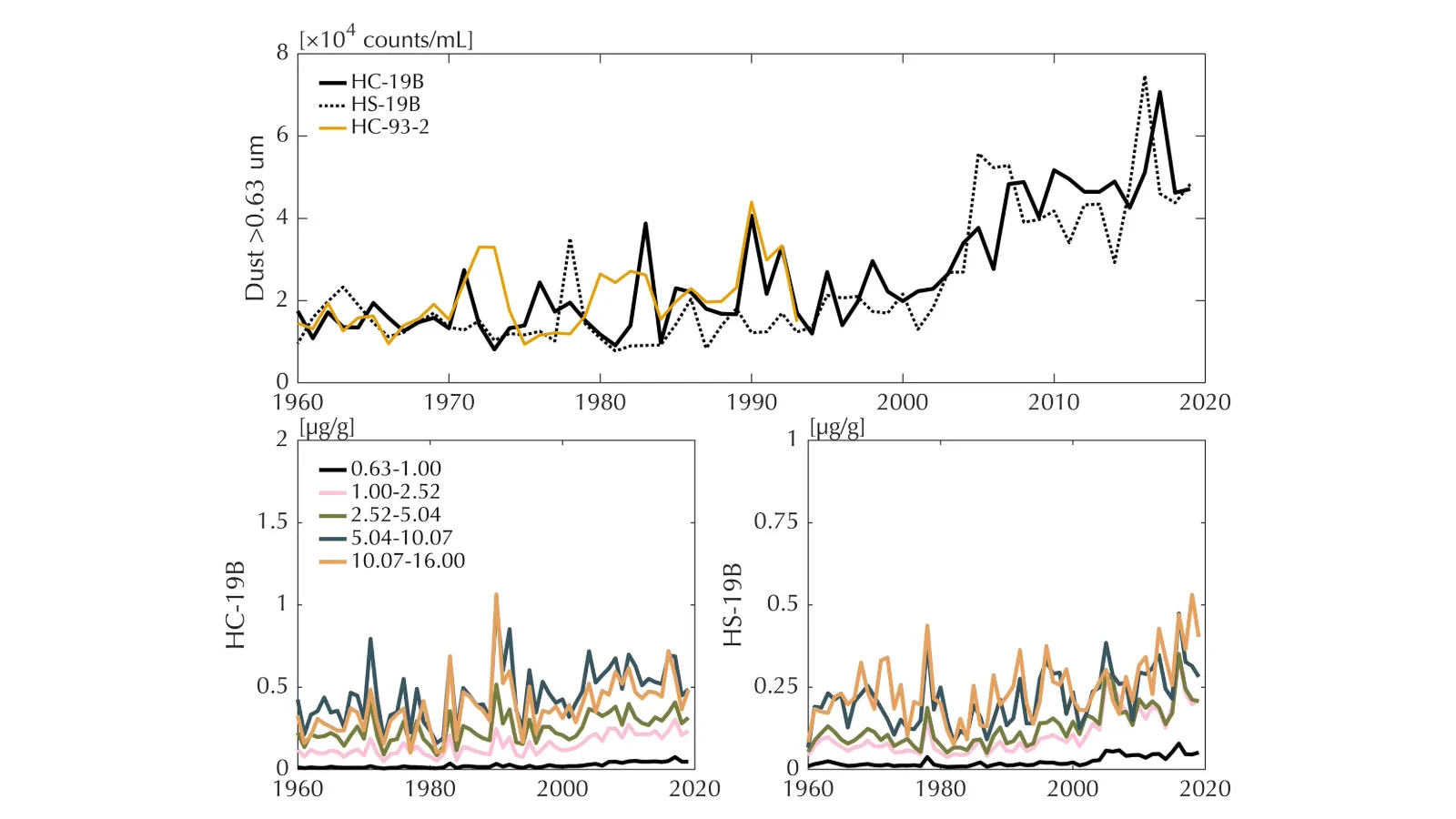
Austin Weber and his colleagues recently published “On the Influence of Mineral Dust on Glacial Albedo at Nevado Huascarán (Cordillera Blanca, Peru)” in Journal of Geophysical Research: Atmospheres and found that although mineral dust deposition has increased on Peru's Nevado Huascarán over the past six decades, its effect on glacier melting remains surprisingly small. Using two 60-year ice core records and a snow radiative transfer model, the team determined that mineral dust reduces glacier surface reflectivity by less than one percent and is unlikely to become a major driver of glacier loss by the end of the century.
Mountain glaciers in the tropical Andes provide freshwater for millions of people, yet little has been known about how mineral dust influences glacier melt in the region. By analyzing ice cores collected from Huascarán, the highest mountain in the tropics, the researchers reconstructed dust deposition from 1960 to 2019 and used the Snow, Ice, and Aerosol Radiative (SNICAR) model to estimate its impact on glacier albedo.
Although dust concentrations have increased over time, the model predicts that dust-driven melting will remain relatively minor compared to current snow accumulation rates. The findings suggest that rising temperatures, rather than mineral dust, continue to be the dominant driver of glacier retreat at Huascarán's highest elevations.
Coauthors include Emilie Beaudon, M. Roxana Sierra-Hernández, Mary Davis, Don Kenny, Tal Y. Shutkin, and Lonnie G. Thompson.
Access the full paper on AGUPubs