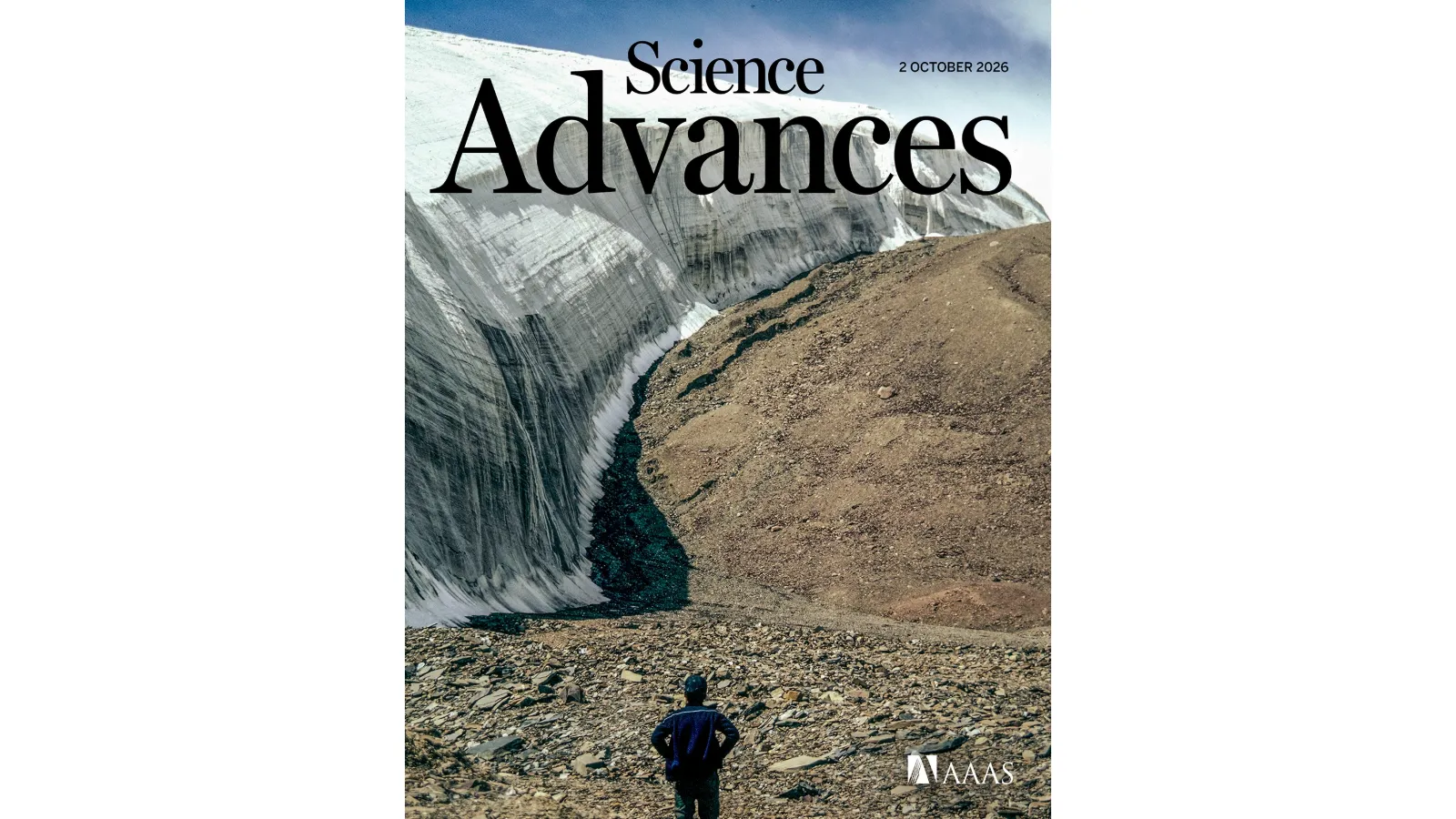
Lonnie Thompson and Colleagues Confirm Ancient Ice Preserved in Guliya Ice Cap
Lonnie Thompson and colleagues recently published new research in Science Advances revealing that ice preserved within the Guliya Ice Cap in northwestern Tibet dates back more than 100,000 years. The findings make the Guliya ice cores the oldest recovered from the region and provide an important new record of Earth’s past climate.
The study compared ice cores collected from the Guliya Plateau during expeditions in 1992 and 2015. Despite being collected more than two decades apart, the cores contained similar oxygen isotope patterns, demonstrating that the climate records preserved within the ice are consistent and reproducible.
To better determine the age of the ice, the researchers used advanced dating techniques involving the radioactive isotopes beryllium-10 and chlorine-36. These measurements allowed the team to identify evidence associated with the Laschamp Geomagnetic Excursion, an event more than 41,000 years ago when Earth’s magnetic field underwent a major change. By combining these findings with oxygen isotope records from nearby Tibetan caves, the researchers estimate that the Guliya ice record may extend back more than 128,000 years.
The discovery confirms that portions of the Guliya Ice Cap survived the last ice age and greatly extends the known climate record preserved in high-elevation glaciers outside the polar regions. While ice cores from Peru’s Nevado Huascarán extend back more than 30,000 years, the Guliya record offers scientists a rare opportunity to examine environmental conditions spanning more than 100,000 years.
Establishing an accurate timeline for the Guliya ice cores will allow researchers to further investigate how Earth’s climate and environment have changed over time. Future analyses of the cores may provide new insight into past periods of glaciation and other key indicators of environmental change.
The research was led by Lonnie Thompson, professor in the School of Earth Sciences and senior research scientist at the Byrd Polar and Climate Research Center. Ohio State co-authors include Mary Davis and Ellen Mosley-Thompson. The international research team also includes Juerg Beer of the Swiss Federal Institute of Aquatic Science and Technology; Christof Vockenhuber and Marcus Christl of ETH Zurich; Tandong Yao of the Chinese Academy of Sciences; and Ninglian Wang and Ling Fang of Northwest University.
The research was supported by the U.S. National Science Foundation.
Read the full publication in Science Advances and learn more about the research through Ohio State News.